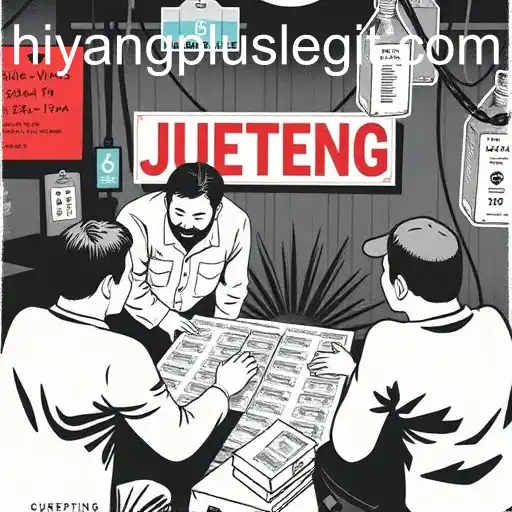
Understanding Jueteng: A Complex Underground Economy
Jueteng is a deeply rooted numbers game in the Philippines, integral to the socio-economic landscape, despite its illegal status. As we explore this intricate system, we'll uncover the operations, societal influence, and intricate connections that make Jueteng a persistent force.
The Operations Behind Jueteng
Originating from Chinese settlers in the Philippines, Jueteng evolved significantly over centuries. At its core, it resembles a lottery, driven by random number draws. However, unlike regulated lotteries, Jueteng evades legal scrutiny, operating clandestinely in numerous communities.
The game's structure involves key roles, such as the cobrador or bet collector, who gathers bets from a large number of players. The kubrador, a variant of cobrador, often provides crucial connections between bettors and the central operator known as the jueteng lord. This lord oversees a network that facilitates operations and ensures profit. Over time, this organized network perpetuated Jueteng's endurance as a gaming option for many Filipinos.
The Socio-Economic Impact of Jueteng
Jueteng's influence extends beyond its entertainment value. Economically, it creates a 'shadow economy' impacting local communities. The game functions as a livelihood source for thousands, from collectors to middlemen, sustaining daily existence for many families. These earnings contribute significantly to local spending, albeit in an informal manner.
Socially, Jueteng fosters community engagement, albeit in a controversial light. With funds often used for community projects, like local festivities or infrastructure improvements, it maintains a dual role as a benefactor. This blend of economic support and social contribution complicates efforts to curb Jueteng, deeply ingrained as it is in several communities.
The Challenges of Regulation
Efforts to regulate or eradicate Jueteng face formidable hurdles, rooted in cultural and economic ties. Law enforcement bodies often grapple with insufficient resources and bureaucratic constraints. Moreover, corrupt practices sometimes impede rigorous enforcement, perpetuating Jueteng's presence despite crackdowns.
Political entanglements also hinder substantial legislative actions. Some local politicians allegedly benefit from Jueteng, using its funds to back campaigns or economic ventures. Such entanglements blur the lines between legal oversight and complicity, embroiling regulatory efforts in complexity.
HIYANGPLUS: The Emerging Keywords in Jueteng Discourse
In recent developments surrounding Jueteng, the term HIYANGPLUS has surfaced, indicative of evolving narratives. While not directly linked to the traditional facets of Jueteng, HIYANGPLUS reflects a growing discourse around innovative solutions and alternatives to entrenched practices.
HIYANGPLUS might symbolize the search for harmonious ways ('hiyang' meaning suited or compatible), as society seeks balanced approaches coping with Jueteng's challenges. It underscores the need for progressive thinking, merging regulatory rigor with socio-economic empathy.
Potential Alternatives and Modern Approaches
Several alternative models attempt to replicate Jueteng's economic contributions legally. The Philippine Charity Sweepstakes Office (PCSO), for example, operates state-sanctioned games aiming to channel Jueteng-style revenue into public welfare legally. However, these efforts must gain the trust and participation levels Jueteng commands organically.
Empowering local communities with educational initiatives and job creation programs may address root causes propagating Jueteng. By providing legal employment pathways and community engagement platforms, stakeholders could mitigate the system’s informal employment dependency.
The Future of Jueteng and Cultural Reflections
Jueteng's persistence in Philippine society mirrors the cultural embrace of games of chance amid socio-economic challenges. To fully grasp its future, one must acknowledge its duality as a source of economic sustenance and a grass-root cultural phenomenon.
Confronting Jueteng requires nuanced interventions, addressing both its economic allure and social acceptance. HIYANGPLUS may symbolize adaptive capacities in governance or community responses. By understanding Jueteng holistically—including all stakeholders and nuanced influences—regulators and advocates can devise effective, culturally resonant strategies.